
Quotes About Time: 25 Timeless Quotes from 25 Great Authors
Time is the subject that writers return to most often, and they describe it in very different ways. This collection brings together 25 quotes about time from 25 different authors, from Confucius, Shakespeare and Longfellow to Pascal, Thoreau and Tolstoy. Each quote is copied word for word from a published book that is free to read on Project Gutenberg.
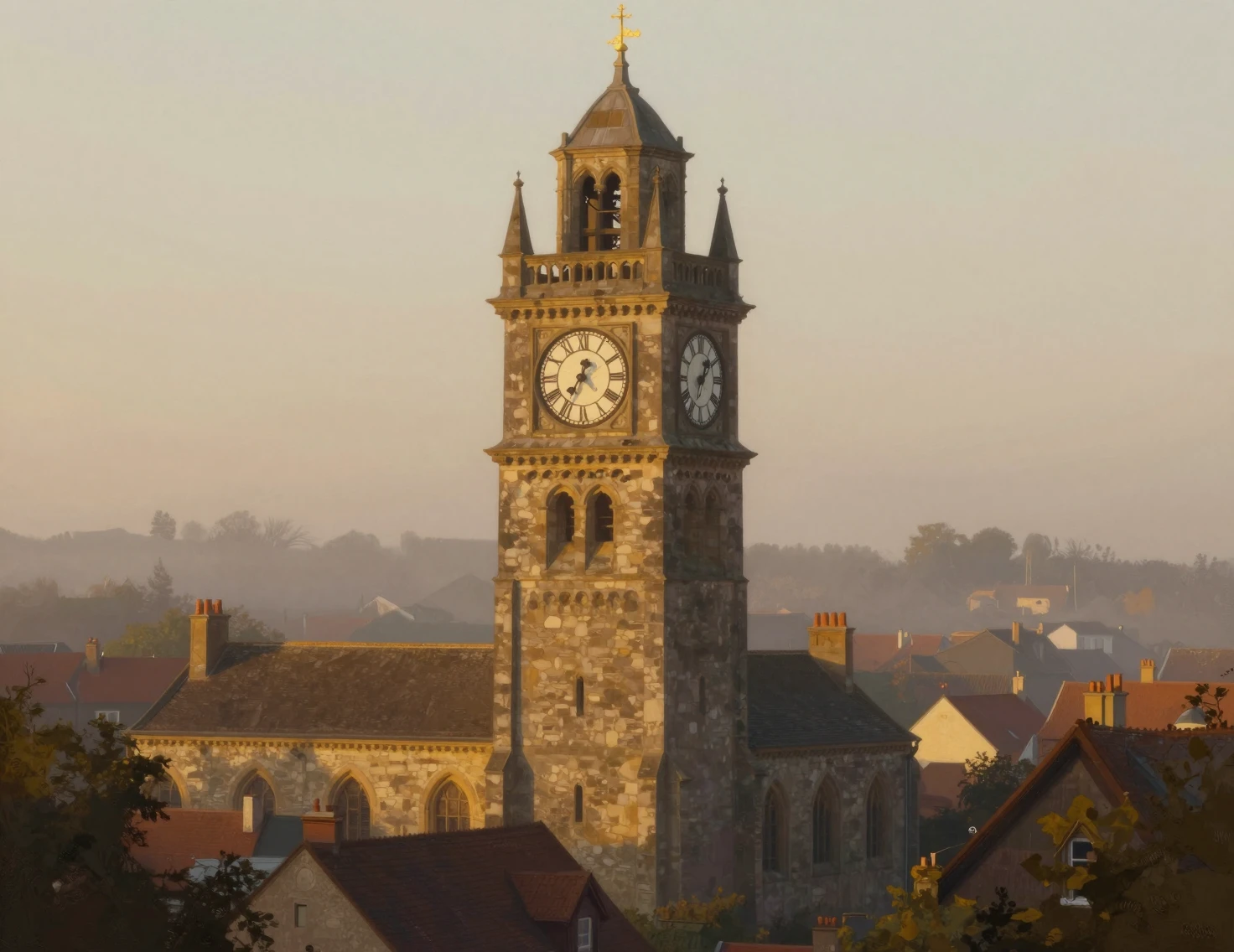
Some of these voices watch time flow like a river, some see it as a ruler of age and change, and some give practical advice on how to use it. A few lines are spoken by characters, such as Macbeth, Mr. Micawber or Peter Pan, and the comments say so. You will also find old friends of the blog here, including William Shakespeare, Charles Dickens and Oscar Wilde.
This collection contains 25 quotes, one from each author, all taken from works available on Project Gutenberg. Several are English translations (Confucius, Cervantes, La Rochefoucauld, Schopenhauer, Pascal, Marcus Aurelius, Thomas à Kempis, Seneca, Aristotle and Tolstoy), so the wording is that of the translator named in the comment. Spelling and punctuation are kept as printed in those editions, and a few quotes are fragments of longer sentences.
25 Quotes About Time
The Flight of Time
“The Master standing by a stream, said, 'It passes on just like this, not ceasing day or night!'”
— Confucius
This is from the Analects, in James Legge's translation. Standing by a stream, the Master says that it passes on just like this, not ceasing day or night. The sentence is often read as a remark on the steady flow of time and of all things. The quotation marks inside the sentence are plain apostrophes in this edition, and the line is quoted as printed there.
“Tomorrow, and tomorrow, and tomorrow, Creeps in this petty pace from day to day, To the last syllable of recorded time”
— William Shakespeare
This is from Macbeth, Act V, Scene V. Macbeth hears that his wife is dead and answers with the speech that begins with tomorrow, and tomorrow, and tomorrow. Days creep on at a petty pace to the last syllable of recorded time. The quotation stops there, and the speech goes on to compare life to a walking shadow. Here time is not a friend but a slow march to the end.
“Art is long, and Time is fleeting, And our hearts, though stout and brave, Still, like muffled drums, are beating Funeral marches to the grave.”
— Henry Wadsworth Longfellow
These lines are from A Psalm of Life, which Longfellow first published in 1838. Art is long and time is fleeting, he says, and even brave hearts beat like muffled drums toward the grave. The poem does not stop on that sad fact: it goes on to urge the reader to act in the living present, so the lines work as a spur to action more than as a complaint about the years.
“How many bards gild the lapses of time!”
— John Keats
This is the first line of a sonnet by Keats, printed in his Poems of 1817. He says that many bards gild the lapses of time, as if poets filled the gaps of the ages with gold. The sonnet goes on to say that a few of them have been the food of his delighted fancy, and that when he sits down to rhyme their beauties intrude upon his mind in throngs. The poets, not the clock, are what he thinks of.
“Look on my works, ye Mighty, and despair!’ Nothing beside remains.”
— Percy Bysshe Shelley
These lines are from Ozymandias, which Shelley wrote in 1817 and published in 1818. A traveller tells of a ruined statue in the desert, with an inscription by a king of kings who tells the mighty to look on his works and despair. After that proud boast the poem says that nothing beside remains. Time has taken the empire and left the ruin. The closing quote mark is as printed in this edition.
“The old order changeth, yielding place to new, And God fulfils Himself in many ways”
— Alfred, Lord Tennyson
These lines are from Morte d'Arthur, in Tennyson's early poems, published in 1842. The wounded King Arthur tells Sir Bedivere that the old order changes, yielding place to new, and that God fulfils himself in many ways. The poem was later reworked as The Passing of Arthur in the Idylls of the King. The line has often been used for the end of an age. The quotation is a fragment of a longer sentence.
“I laid the blame on Time, the devourer and destroyer of all things, that had either concealed or consumed it.”
— Miguel de Cervantes
This is from Chapter IX of Part I of Don Quixote, in John Ormsby's translation. The narrator has broken off the story in the middle of a battle, because the old history he follows seems to end there. He says he could not believe that so fine a tale had been left maimed, and he blames Time, the devourer and destroyer of all things, for hiding or consuming the rest. Soon after, he finds the missing pages.
“Well, time does fly indeed!—and my memory is very bad.”
— Jane Austen
This is from Emma. Mr. Woodhouse says it after his daughter Emma tells him, in speaking of Frank Churchill, that he is three-and-twenty and that he forgets how time passes. Astonished, he remembers that the young man was but two years old when he lost his poor mother. The line is comic, and it is an ordinary person's way of noticing how quickly the years go.
Age, Change and the Power of Time
“Surely every medicine is an innovation; and he that will not apply new remedies, must expect new evils; for time is the greatest innovator”
— Francis Bacon
This is from the essay Of Innovations. Bacon argues that every remedy is a change, so that a man who will not apply new remedies must expect new evils, and he adds that time is the greatest innovator. His point is that time changes everything whether people allow it or not, so wise people should change things with care and on purpose. The quotation is a fragment of a longer sentence.
“But here the all-powerful agent, Time, comes in and claims its rights, and before its influence physical and mental advantages gradually waste away. Moral character alone remains inaccessible to it.”
— Arthur Schopenhauer
This is from the essays of Schopenhauer, in T. Bailey Saunders's translation, in the part on what a man is, what he has and what he represents. He says that time, the all-powerful agent, comes in and claims its rights, and before its influence physical and mental advantages gradually waste away. Only moral character, he says, stays out of its reach.
“Age is a tyrant who forbids at the penalty of life all the pleasures of youth.”
— François de La Rochefoucauld
This is maxim 461 in the numbered list of La Rochefoucauld's Reflections, in the Project Gutenberg edition, which does not name its translator in the part we read. He calls age a tyrant that forbids, at the penalty of life, all the pleasures of youth. The remark presents time as a ruler who sets the limits of what a person may enjoy, and it does so in one dry sentence.
“I’m youth, I’m joy,” Peter answered at a venture, “I’m a little bird that has broken out of the egg.”
— J. M. Barrie
This is from Peter Pan, in the last duel between Peter and Captain Hook on the pirate ship. Hook, who has begun to fear that some fiend is fighting him, cries out, Pan, who and what art thou? Peter answers that he is youth and joy, a little bird that has broken out of the egg. Barrie adds that this was nonsense, but that it proved to Hook that Peter did not know who or what he was. Peter is the boy time does not touch.
“Time is jealous of you, and wars against your lilies and your roses.”
— Oscar Wilde
This is from The Picture of Dorian Gray, in the second chapter. Lord Henry Wotton speaks to the young Dorian Gray, who is wonderfully handsome, and tells him that time is jealous of him and wars against his lilies and his roses. The remark plants in Dorian's mind the wish that his portrait might age in his place.
“Time and space are but physiological colors which the eye makes, but the soul is light: where it is, is day; where it was, is night”
— Ralph Waldo Emerson
This is from the essay History, in Emerson's Essays, First Series. He has just said that the centuries are conspirators against the sanity and authority of the soul. Then he adds that time and space are but physiological colors which the eye makes, while the soul is light, so that where it is, is day, and where it was, is night. For Emerson the soul is not carried along by time. The quotation stops before the end of the sentence.
“You would measure time the measureless and the immeasurable.”
— Kahlil Gibran
This is from The Prophet, in the part called On Time. An astronomer asks the prophet Almustafa, Master, what of Time? He answers that we would measure time, the measureless and the immeasurable, and would adjust our conduct and direct the course of our spirit according to its hours. The reply is a gentle warning against turning life into a clock.
“We do not rest satisfied with the present. We anticipate the future as too slow in coming, as if in order to hasten its course; or we recall the past, to stop its too rapid flight.”
— Blaise Pascal
This is from the Pensées, in the English translation published on Project Gutenberg, which numbers this passage 172. Pascal says that we never rest in the present: we anticipate the future as too slow in coming, as if to hasten its course, or we recall the past to stop its too rapid flight. We live, in his view, in times that are not ours and let go of the only one that is.
Using the Time We Have
“As if you could kill time without injuring eternity.”
— Henry David Thoreau
This is from Walden, in the first chapter, Economy. Thoreau writes about work and idleness and about people who say they are trying to kill time. He answers that it is as if you could kill time without injuring eternity. The sentence is short, dry and a little comic, and it turns the idea of killing time into a question about what we do with our whole lives.
“My advice is, never do tomorrow what you can do today. Procrastination is the thief of time. Collar him!”
— Charles Dickens
This is from David Copperfield. Mr. Micawber is the speaker, and it is he who gives this advice to young David: never do tomorrow what you can do today, because procrastination is the thief of time, and he adds Collar him! The irony of the scene is that Micawber is himself always in debt, so the advice is wise but the speaker is not.
“Work while it is called To-day; for the Night cometh, wherein no man can work.”
— Thomas Carlyle
This is from Sartor Resartus, in the chapter The Everlasting Yea, a book of 1831. The speaker is Teufelsdröckh, the fictional German professor created by Carlyle. After a long spiritual crisis he tells himself to do whatever his hand finds to do with his whole might, and to work while it is called To-day, because the Night cometh, wherein no man can work. The words echo the Gospel of John.
“Remember how long thou hast already put off these things, and how often a certain day and hour as it were, having been set unto thee by the gods, thou hast neglected it.”
— Marcus Aurelius
This is from the second book of the Meditations of Marcus Aurelius, in the English translation by Meric Casaubon published on Project Gutenberg. The emperor tells himself, in a private note, to remember how long he has already put off these things, and how often a day and hour set by the gods has been neglected. The next sentence says that it is high time to understand the true nature of the world. The note is a reproach to himself, not to others.
“Therefore must we watch and pray that time pass not idly away.”
— Thomas à Kempis
This is from The Imitation of Christ, in Rev. William Benham's translation. The writer warns that outward consolation is a hindrance to the inner comfort that comes from God, and he concludes that we must therefore watch and pray that time pass not idly away. The advice is to guard time as one guards a gift.
“There passes not an hour of our lives, wherein we do not enjoy the blessings of Providence, without measure and without intermission.”
— Seneca
This is from Seneca's Morals of a Happy Life, Benefits, Anger and Clemency, in Sir Roger L'Estrange's translation. In the part on benefits Seneca asks what the sun gains by travelling about the universe and comforting all the quarters of the earth, and he says that not an hour of our lives passes without our enjoying the blessings of Providence. The hours here are counted as gifts and not as losses.
“for as it is not one swallow or one fine day that makes a spring, so it is not one day or a short time that makes a man blessed and happy.”
— Aristotle
This is from the Nicomachean Ethics, Book I, in D. P. Chase's translation. Aristotle is describing happiness as a whole life well lived. Just as one swallow or one fine day does not make a spring, he says, one day or a short time does not make a man blessed and happy. The quotation begins after a note mark in the edition, so it starts with a lowercase letter.
“It is not difficult to capture a fortress but it is difficult to win a campaign. For that, not storming and attacking but patience and time are wanted.”
— Leo Tolstoy
This is from War and Peace, in the translation by Louise and Aylmer Maude. The old commander Kutuzov is speaking about the advisers who surround him and recalls the Turkish war, in which Kamenski stormed fortresses with thirty thousand men. He says that it is not difficult to capture a fortress but difficult to win a campaign, and that for that what is wanted is not storming and attacking but patience and time.
“I had no time to hate, because The grave would hinder me, And life was not so ample I Could finish enmity.”
— Emily Dickinson
This is a poem from the first collection of Dickinson's poems, edited by two of her friends, in this Project Gutenberg edition. The speaker says she had no time to hate, because the grave would hinder her, and life was not so ample that she could finish enmity. The poem uses the shortness of life as an argument for forgiveness. The last line of the poem is not included here.
Conclusion
Read together, these 25 sentences give no single view of time. Confucius and Longfellow see it flowing past, Bacon and Schopenhauer see it changing everything, and Thoreau, Marcus Aurelius and Carlyle tell us to act while there is still a today. Dickinson and Tolstoy add that time can also heal and that it can be an ally if one has patience.
What most of them share is that time is not something to spend carelessly or to fear without reason. Keep the line that fits the hour you are in and use the next one well.
Frequently Asked Questions
Why does this collection use 25 different authors?
Each author appears only once, so the collection shows many views of time, from poems and plays to essays and novels, instead of repeating one voice.
Are these quotes copied from real texts?
Yes. Each quote was copied word for word from a published text available on Project Gutenberg and checked against the source before use. Some are fragments of longer sentences, and the comment says so when needed.
Are the quotes in their original language?
Most are in English originally. Confucius, Cervantes, La Rochefoucauld, Schopenhauer, Pascal, Marcus Aurelius, Thomas à Kempis, Seneca, Aristotle and Tolstoy are quoted in the English translations published on Project Gutenberg, and the translator is named in the comment when the edition gives one.
Which text is quoted here?
Every quote comes from a free edition on Project Gutenberg, and the work it is taken from is named in the comment under each quote. For the authors who did not write in English, we used the translations published there: James Legge for Confucius, John Ormsby for Cervantes, T. Bailey Saunders for Schopenhauer, Meric Casaubon for Marcus Aurelius, William Benham for Thomas à Kempis, Sir Roger L'Estrange for Seneca, D. P. Chase for Aristotle, and Louise and Aylmer Maude for Tolstoy. The editions of La Rochefoucauld and Pascal do not name their translator in the part we read. To check a line yourself, search the book on gutenberg.org and look for the sentence in the chapter mentioned in the comment.
Recommended Similar Collections on Quotyzen
- William Shakespeare: the Bard of Avon and master of the human condition
- Oscar Wilde: aesthetic wit and the decay of lying
- Charles Dickens: Victorian conscience and a Christmas Carol
Which of these quotes about time speaks to you most? Share your view in the comments below!
Join the conversation