
Quotes About Nature: 25 Timeless Quotes from 25 Great Authors
Writers have turned to nature for as long as there have been writers, and they find different things in it. This collection brings together 25 quotes about nature from 25 different authors, from Darwin, Emerson and Thoreau to Muir, Whitman and Tagore. Each quote is copied word for word from a published text that is free to read on Project Gutenberg.
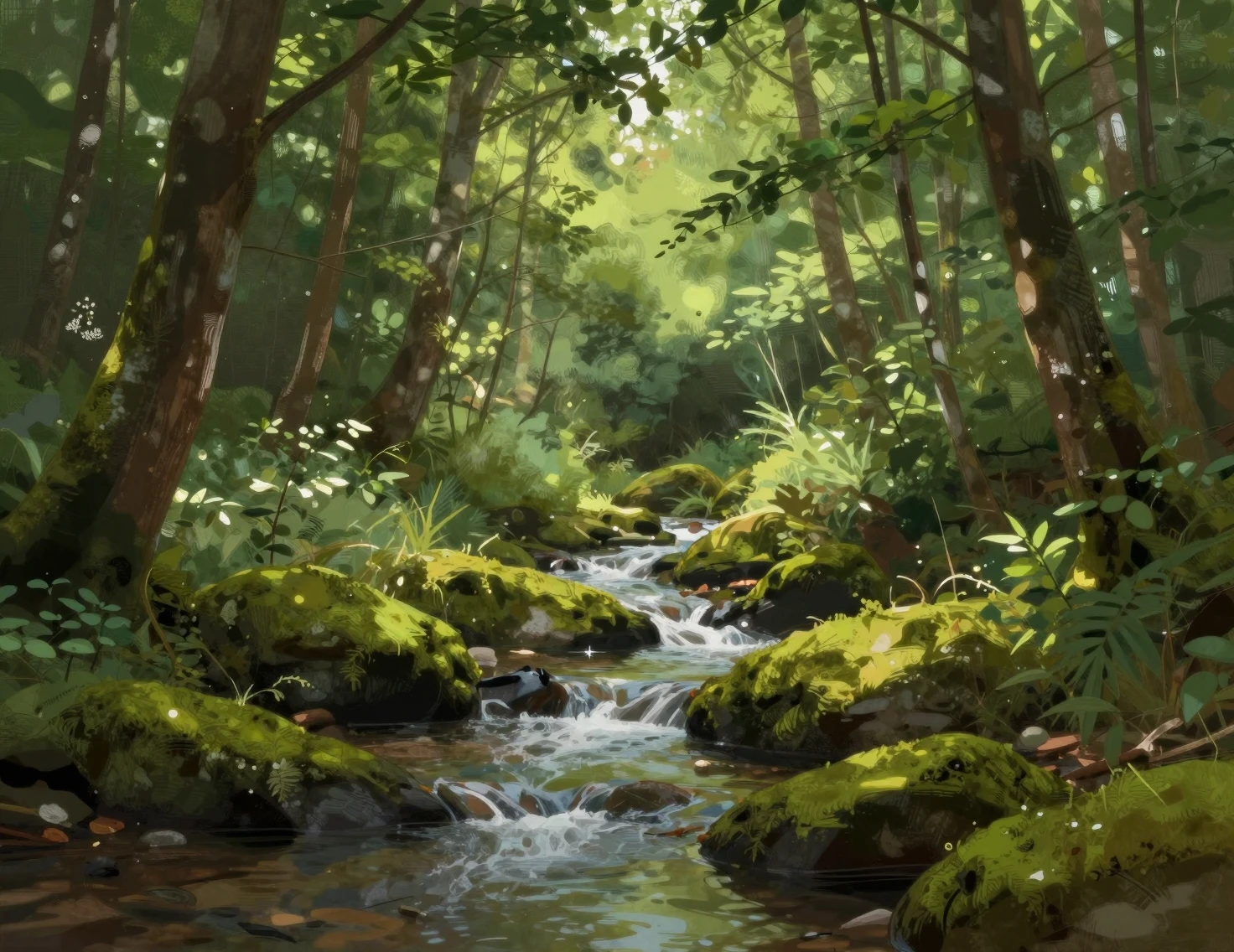
Some of these voices see nature as a teacher, some as a source of song and season, and some as a wild place older than people. A few lines are spoken by characters, such as Duke Senior in As You Like It, Anne Shirley or Marlow in Heart of Darkness, and the comments say so. You will also find old friends of the blog here, including William Shakespeare, Charles Dickens and Oscar Wilde.
This collection contains 25 quotes, one from each author, all taken from works available on Project Gutenberg. Several are English translations (Montaigne, Marcus Aurelius and Voltaire), and Tagore's Gitanjali is his own English version, so the wording is that of the edition on Project Gutenberg. Spelling and punctuation are kept as printed, and a few quotes are fragments of longer sentences.
25 Quotes About Nature
Nature as Teacher and Wonder
“There is grandeur in this view of life, with its several powers, having been originally breathed into a few forms or into one; and that, whilst this planet has gone cycling on according to the fixed law of gravity, from so simple a beginning endless forms most beautiful and most wonderful have been, and are being, evolved.”
— Charles Darwin
This is the closing sentence of On the Origin of Species. Darwin sees grandeur in the view that life was originally breathed into a few forms or into one, and that from so simple a beginning endless forms most beautiful and most wonderful have been, and are being, evolved. The planet goes cycling on by the fixed law of gravity, and life develops on it. It is a scientist's praise of nature.
“Nature always wears the colors of the spirit.”
— Ralph Waldo Emerson
This is from Emerson's Nature. He says that nature always wears the colors of the spirit, and then gives an example: to a man laboring under calamity, the heat of his own fire has sadness in it. The point is that the world seems to share the mood of whoever looks at it.
“And this our life, exempt from public haunt, Finds tongues in trees, books in the running brooks, Sermons in stones, and good in everything.”
— William Shakespeare
This is from As You Like It, Act II, Scene I. Duke Senior has been banished to the forest of Arden, and he says that this life, away from public haunt, finds tongues in trees, books in the running brooks, sermons in stones, and good in everything. Amiens answers that he would not change it. The Duke treats the woods as a school and a church.
“These are the good lessons our mother Nature teaches.”
— Michel de Montaigne
This is from Montaigne's Essays. He has just quoted a saying that every day travels towards death, and that the last day only arrives at it. He then calls these the good lessons our mother Nature teaches. For him nature is a teacher that shows how to face death calmly, as part of the same order as birth and growth.
“O Nature! from thee are all things, in thee all things subsist, and to thee all tend.”
— Marcus Aurelius
This is from the Meditations of Marcus Aurelius, in the English translation published on Project Gutenberg. The emperor addresses Nature directly and says that from her are all things, in her all things subsist, and to her all tend. The line shows the Stoic view of the world as one ordered whole, and of the person as a small part of it.
“To me the meanest flower that blows can give Thoughts that do often lie too deep for tears.”
— William Wordsworth
This is the last line of Wordsworth's Ode on Intimations of Immortality, printed in Palgrave's Golden Treasury. He says that to him the meanest flower that blows can give thoughts that do often lie too deep for tears. The line moves from a small plant to a feeling too large for tears. The ode as a whole is about what is lost and kept as we grow older.
“Heaven is under our feet as well as over our heads.”
— Henry David Thoreau
This is from Walden, in the chapter on the ponds, where Thoreau writes about Walden Pond. He says that heaven is under our feet as well as over our heads. The sentence turns the usual direction of looking up for the divine, and asks the reader to see the ordinary ground and water of the pond as part of heaven.
“How many mouths Nature has to fill, how many neighbors we have, how little we know about them, and how seldom we get in each other’s way!”
— John Muir
This is from My First Summer in the Sierra. Muir writes in his journal while watching the small animals around his camp, such as ants that build large piles of seed husks and leaves over their nests. He wonders how many mouths Nature has to fill, how many neighbors we have, how little we know about them, and how seldom we get in each other's way.
Seasons, Weather and Song
“If Winter comes, can Spring be far behind?”
— Percy Bysshe Shelley
This is from Shelley's Ode to the West Wind, the last line of the poem. After calling on the wind to carry his words across the world, he asks it a question about the seasons: if Winter comes, can Spring be far behind? The line is a famous expression of hope drawn from the yearly return of spring after winter.
“The poetry of earth is never dead”
— John Keats
This is the first line of a sonnet by Keats that is usually called On the Grasshopper and Cricket, printed in his Poems of 1817. He says that the poetry of earth is never dead. The sonnet goes on to show that the earth always has a song, in summer from the grasshopper and in winter from the cricket. The quotation is a fragment of the first sentence.
“Break, break, break, On thy cold gray stones, O Sea!”
— Alfred, Lord Tennyson
These lines are from Break, Break, Break, a short poem by Tennyson about grief. The poet stands by the sea and calls on the waves to break on their cold gray stones. He then says that he would that his tongue could utter the thoughts that arise in him. The sea here is a mirror for a feeling too large for words.
“The day is cold, and dark, and dreary It rains, and the wind is never weary;”
— Henry Wadsworth Longfellow
These lines open The Rainy Day, by Longfellow. The poet describes a cold, dark and dreary day on which it rains and the wind is never weary. The next lines add that the vine still clings to the mouldering wall, but at every gust the dead leaves fall. Weather and season are used to describe a sad mood, as in much nature poetry. The punctuation is as printed in this edition.
“To make a prairie it takes a clover and one bee, -- One clover, and a bee, And revery.”
— Emily Dickinson
This is from the first collection of Dickinson's poems, edited by two of her friends. The little poem says that to make a prairie it takes a clover and one bee, and then repeats it in short lines: one clover, and a bee, and revery. It adds that the revery alone will do if bees are few. The double hyphen is as printed in this edition.
“O my Luve’s like a red, red rose, That’s newly sprung in June”
— Robert Burns
These lines open A Red, Red Rose, by Robert Burns. The poet compares his love to a red, red rose that is newly sprung in June, and in the next lines to a melody that is sweetly played in tune. The rose of early summer is the freshest image he could find. The spelling and the apostrophes are as printed in this edition.
“Spring was moving in the air above and in the earth below and around him”
— Kenneth Grahame
This is from The Wind in the Willows, in the first chapter. The Mole has been spring-cleaning his little home when he feels the pull of the spring outside. Grahame writes that spring was moving in the air above and in the earth below and around him, and the Mole leaves his work. The sentence is a fragment, and it begins the Mole's journey to the river bank.
“I’m so glad I live in a world where there are Octobers.”
— L. M. Montgomery
This is from Anne of Green Gables. Anne comes dancing in one Saturday morning in autumn, with her arms full of gorgeous boughs, and says so to Marilla. She adds that it would be terrible if we just skipped from September to November. The line is a young girl's delight in October colors, and it has become one of the book's best known sentences.
“I think I could turn and live with animals, they are so placid and self-contain’d, I stand and look at them long and long.”
— Walt Whitman
These lines are from Leaves of Grass, in Whitman's Song of Myself. The poet says he could turn and live with animals, because they are so placid and self-contained that he stands and looks at them long and long. The next lines say that they do not sweat and whine about their condition. The spelling self-contain'd is printed with a curly apostrophe in this edition.
Wild Places and Quiet Gardens
“Going up that river was like traveling back to the earliest beginnings of the world, when vegetation rioted on the earth and the big trees were kings.”
— Joseph Conrad
This is from Heart of Darkness. Marlow is telling of his journey up the river in Africa. He says that going up that river was like traveling back to the earliest beginnings of the world, when vegetation rioted on the earth and the big trees were kings. Conrad then describes an empty stream, a great silence and an impenetrable forest. Here nature is vast and older than people.
“There is an ecstasy that marks the summit of life, and beyond which life cannot rise.”
— Jack London
This is from The Call of the Wild. London writes that there is an ecstasy that marks the summit of life, and beyond which life cannot rise. He goes on to say that this ecstasy comes when one is most alive, and that it comes as a complete forgetfulness that one is alive. In the novel it describes the wild joy of the dog Buck in the hunt.
“By the Law of the Jungle he has no right to change his quarters without due warning.”
— Rudyard Kipling
This is from The Jungle Book, in the first story. Father Wolf is speaking about the tiger Shere Khan, who has moved his hunting ground to the wolves' area. He says that by the Law of the Jungle the tiger has no right to change his quarters without due warning, because he will frighten every head of game within ten miles. The wild is shown as having rules.
“It’s lovely to live on a raft. We had the sky up there, all speckled with stars, and we used to lay on our backs and look up at them, and discuss about whether they was made or only just happened.”
— Mark Twain
This is from Adventures of Huckleberry Finn. Huck is telling how he and Jim live on the raft on the river. He says that it is lovely to live on a raft, and that they had the sky up there, all speckled with stars, and used to lay on their backs and discuss whether the stars were made or only just happened. Jim thinks they were made, and Huck thinks they happened.
“The sea that calls all things unto her calls me, and I must embark.”
— Kahlil Gibran
This is from The Prophet, in Almustafa's farewell speech to the people of the city. He says that he cannot tarry longer, because the sea that calls all things unto her calls him, and he must embark. The next sentence says that to stay is to freeze and crystallize and be bound in a mould. The sea is the image of the pull of a journey.
“The life breath of thy music runs from sky to sky.”
— Rabindranath Tagore
This is from poem 3 of Gitanjali, in Tagore's own English version. The poet says that he knows not how God sings, and that he ever listens in silent amazement. The light of that music illumines the world, and its life breath runs from sky to sky. The music of God fills nature from one end of the sky to the other.
“we must cultivate our garden”
— Voltaire
These words are from Candide, in the closing pages. Pangloss lists the crimes and misfortunes of kings, and Candide answers that he knows also that we must cultivate our garden. The sentence ends the book. After all the wars and disasters of the story, the answer is plain work on a small piece of land, and that is what many readers remember of the novel.
“And indeed it is the purest of human pleasures.”
— Francis Bacon
This is from the essay Of Gardens. Bacon begins that God Almighty first planted a garden, and he adds that it is the purest of human pleasures. The word God is printed in capitals in this edition. Bacon goes on to discuss which plants bloom in each month of the year. The quotation is the second sentence of the essay.
Conclusion
Read together, these 25 sentences give no single picture of nature. Darwin and Muir look at it with a naturalist's wonder, Wordsworth and Keats hear poetry in it, and Conrad and London remind us that it can be vast and wild. Voltaire and Bacon bring it down to a garden.
What they share is attention. Each author looks at a small thing, a flower, a clover, a raft on a river, and finds more in it than expected. Keep the line that fits the season you are in, and go outside to read it.
Frequently Asked Questions
Why does this collection use 25 different authors?
Each author appears only once, so the collection shows many views of nature, from science and essays to novels and poems, instead of repeating one voice.
Are these quotes copied from real texts?
Yes. Each quote was copied word for word from a published text available on Project Gutenberg and checked against the source before use. Some are fragments of longer sentences, and the comment says so when needed.
Are the quotes in their original language?
Most are in English originally. Montaigne, Marcus Aurelius and Voltaire are quoted in the English translations published on Project Gutenberg, which do not name the translator in the parts we read, and Tagore's Gitanjali is in his own English version.
Which text is quoted here?
Every quote comes from a free edition on Project Gutenberg, and the work it is taken from is named in the comment under each quote. The works include On the Origin of Species, Emerson's Essays, the complete works of Shakespeare, Montaigne's Essays, the Meditations of Marcus Aurelius, Palgrave's Golden Treasury, Walden, My First Summer in the Sierra, Keats's Poems of 1817, Tennyson's poems, Longfellow's poems, Dickinson's poems, the poems of Burns, The Wind in the Willows, Anne of Green Gables, Leaves of Grass, Heart of Darkness, The Call of the Wild, The Jungle Book, Huckleberry Finn, The Prophet, Gitanjali, Candide and Bacon's Essays. To check a line yourself, search the book on gutenberg.org and look for the sentence in the work named in the comment.
Recommended Similar Collections on Quotyzen
- William Shakespeare: the Bard of Avon and master of the human condition
- Oscar Wilde: aesthetic wit and the decay of lying
- Charles Dickens: Victorian conscience and a Christmas Carol
Which of these quotes about nature speaks to you most? Share your view in the comments below!
Join the conversation