
Isadora Duncan: The Architect of Modern Dance and Bodily Freedom
Isadora Duncan (1877–1927) was an American dancer who changed the art of movement. Born in San Francisco, she rejected the stiff positions and tight costumes of classical ballet and danced barefoot in light Greek-style tunics, taking her inspiration from ancient art, the waves of the sea, and the natural motion of the body. She toured Europe and Russia, opened schools, and became the best-known pioneer of what is now called modern dance.
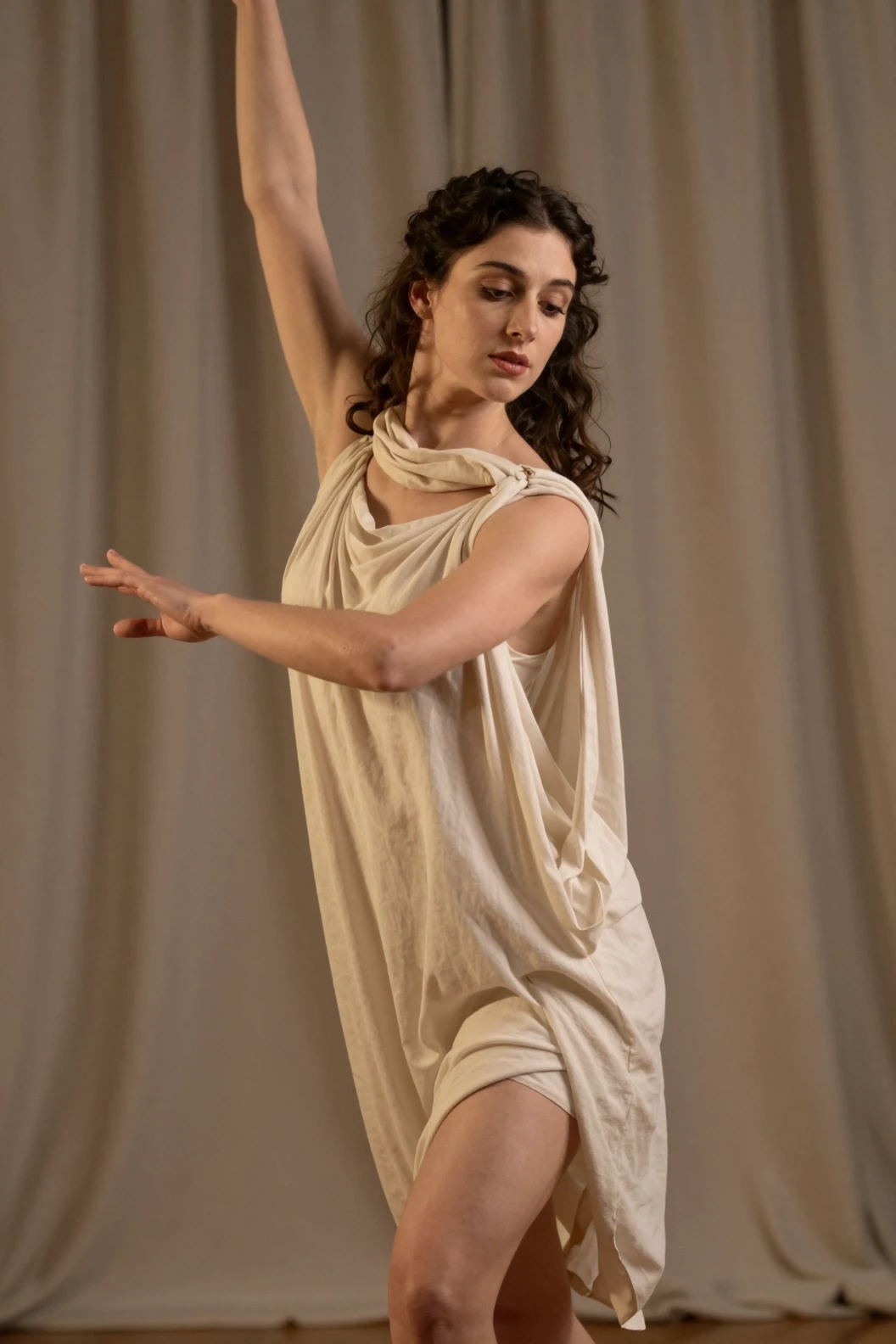
Her life was as bold as her art. She lived through fame, love affairs, the loss of her children in 1913, and constant money troubles, and she told the story herself in My Life, published in 1927 shortly after her death in Nice. The book is frank, vivid, and often funny. Her belief that art must come from truth and from the whole person is shared by performers such as Sarah Bernhardt and Constantin Stanislavski.
This collection contains 17 sentences from the public-domain edition of My Life hosted by Project Gutenberg Canada. Each line is quoted exactly as printed, grouped by theme, with a short note on what it reveals about her art and her outlook.
17 Quotes from Isadora Duncan
Dance as Truth
“My Art is just an effort to express the truth of my Being in gesture and movement.”
This is her simplest definition of dance. For Duncan, movement was not decoration or display but a way of telling the truth about who she was. It places honesty ahead of technique. This is why her dances looked so different from the choreography of her day, and why she always insisted on music chosen for feeling rather than display.
“From the first I have only danced my life.”
Her art and her life were inseparable. Joys, sorrows, and loves all became material for the dance. The sentence helps explain why her performances felt so personal to audiences. She remained convinced that an art made from personal truth would speak more widely than any borrowed technique.
“As a child I danced the spontaneous joy of growing things.”
She remembered dancing as a child because plants, waves, and wind seemed to move her. That early joy became the foundation for her later idea of natural movement. It is an image that would later guide her teaching, as she encouraged children to move like waves, trees, and wind.
“It has taken me years of struggle, hard work and research to learn to make one simple gesture.”
Behind the appearance of ease lay long labour. Duncan reminds readers that simplicity is hard-won and that a natural-looking movement is often the product of years of searching. Her audiences saw a lightness that hid the labour behind it, and she wanted young dancers to know the real price.
“It has taken me long years to find even one absolutely true movement.”
She sought movements that came from the inner self, not from learned steps. Finding even one true gesture, she says, was a great achievement. The sentence shows her high standard for honesty in art. Today's dancers often talk about authenticity, and her search for truthful gesture was among the earliest statements of that ideal.
Life, Truth, and Memory
“Life is a dream, and it is well that it is so, or who could survive some of its experiences?”
A sentence that carries the weight of her many losses. Seeing life as a dream gives distance from pain. It is a thoughtful remark from a woman who suffered terribly yet kept creating. Given what she lived through, the thought sounds less like a poet's fancy than a way to keep going.
“No woman has ever told the whole truth of her life.”
In the opening pages Duncan acknowledges a challenge: society pressures women to hide or soften their experiences. She promises to be more open than most, and the book earned a reputation for frankness. The opening of My Life sets out her aim of telling more than the polite biographies of her time would allow.
“We may not all break the Ten Commandments, but we are certainly all capable of it.”
A humane comment on temptation. Duncan does not judge people harshly, since she knows how easily anyone might stray. It shows the broad, forgiving tone of the book. She writes without moralising, and it makes her story feel more honest and more human.
“Any woman or man who would write the truth of their lives would write a great work.”
Honest autobiography, she believes, is worth reading because real lives are rich. The sentence is an invitation to readers to see their own experience as material of value. Her own memoir, full of success, scandal, and sorrow, is her attempt to meet that challenge.
Childhood and the Sea
“The character of a child is already plain, even in its mother’s womb.”
She suggests that temperament appears before birth. Whether or not one agrees, the line shows how strongly she believed in inborn nature and in respecting it. A person's earliest tendencies, she believed, are signs of a path, and a wise adult learns to read them.
“I was born by the sea, and I have noticed that all the great events of my life have taken place by the sea.”
The sea runs through her story as a source of rhythm and calm. San Francisco Bay was her first landscape, and later seaside places mark turning points in her life. Her family moved around the Bay Area, and the shoreline, with its endless rhythm, became part of her imagination.
“My life and my art were born of the sea.”
A short, poetic statement of origin. The motion of waves taught her about flowing movement, rise and fall, and continuous energy, all central to her dance. Dancers today still speak of flow and breath, qualities she first noticed in the surf.
“The sea has always drawn me to it, whereas in the mountains I have a vague feeling of discomfort and a desire to fly.”
Duncan describes her sense of place. Open water gave her freedom, while mountains felt confining. The contrast reflects her wish for wide, unobstructed space. Later she danced beside the Mediterranean and the Aegean, and she often described the seashore as her true studio.
Freedom, Love, and Will
“I made a vow then and there that I would never lower myself to this degrading state.”
A young Duncan makes a firm resolution about the kind of life she will refuse to accept. The sentence reveals the fierce independence that shaped her choices, for better and worse. It was a bold ideal for a young woman at the turn of the twentieth century, when expectations for women were narrow.
“It was owing to her example that I have never worn a jewel in my life.”
She credits the example of someone she admired for a lifelong habit of going without jewellery. The remark fits her art, where the body, not costume, did the work. That attitude fits her stage appearance, where simple draped tunics and bare feet replaced the sparkle of the ballet costume.
“I believe that since then I have never ceased to be madly in love.”
Duncan's openness to love was lifelong. She describes love as a constant, feeding both her art and her troubles. The line is typical of her romantic, unguarded voice. Love and art were bound together for her, and the book shows both what that devotion gave her and what it cost.
“I am indeed the spiritual daughter of Walt Whitman.”
Whitman's celebration of the body and of democratic America inspired her. She saw herself as continuing his project in dance: a free, joyous art that belonged to everyone. Whitman's Leaves of Grass celebrated body and soul alike, and she saw her dance as a kind of living poem in the same spirit.
Conclusion
Isadora Duncan asked for a dance that came from honesty, nature, and freedom. Her insistence on natural movement and expressive truth opened the way for modern dance, and her voice in My Life remains direct, passionate, and unconventional.
She died in 1927 in Nice, France, when her scarf caught in the wheel of a car. Her schools, her influence on choreographers, and the many dancers who still describe her as a liberator show that her ideas survived her.
Frequently Asked Questions
Who was Isadora Duncan?
Isadora Duncan (1877–1927) was an American dancer, born in San Francisco, who is regarded as a founder of modern dance. She rejected classical ballet technique in favour of natural, expressive movement.
What is “My Life” by Isadora Duncan?
My Life is her autobiography, published in 1927, shortly after her death. It describes her childhood, her career in Europe and Russia, her relationships, and her ideas about art.
How did Isadora Duncan die?
She died on 14 September 1927 in Nice, France, when a long scarf she was wearing became entangled in the rear wheel of the open car in which she was travelling.
Which text is quoted here?
They come from the public-domain edition of My Life published online by Project Gutenberg Canada. Print editions may differ slightly in spelling or punctuation.
Recommended Similar Collections on Quotyzen
- Sarah Bernhardt – The First Global Star of the Stage
- Constantin Stanislavski – The Architect of Modern Acting
- Auguste Rodin – Father of Modern Sculpture
Which of Isadora's lines speaks to you most? Share it in the comments below!
Join the conversation